What is an electrical COC?
An electrical Certificate of Compliance is a formal record connected to an electrical installation. It confirms that the relevant work has been inspected and tested against the applicable requirements by the person responsible for the certificate. It is not a performance guarantee: it does not promise that your panels will produce a particular amount of energy, or that a battery will last for a certain number of years. It is about the electrical installation and the condition of the work covered by the certificate.
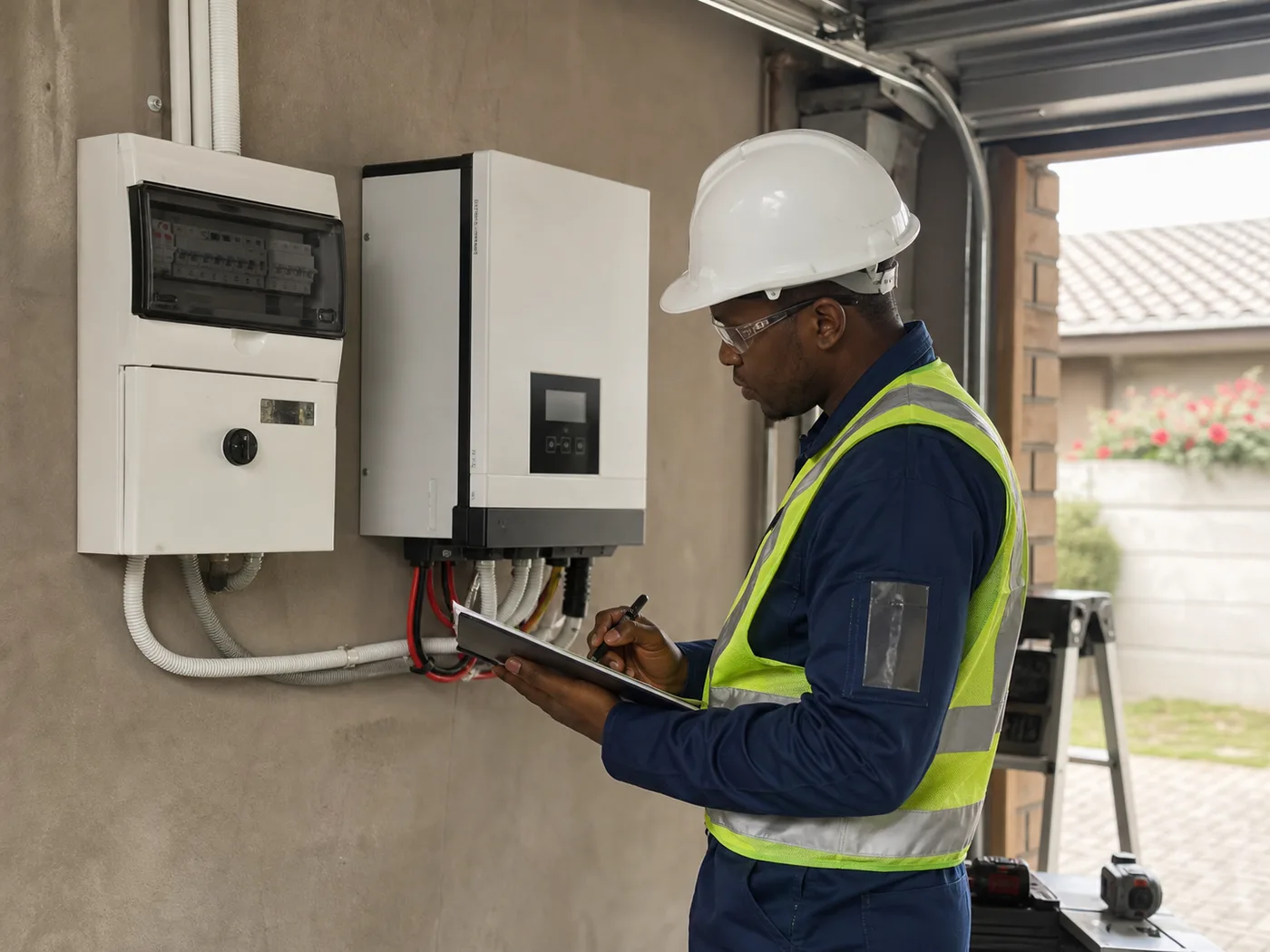
For solar, that may include the new inverter, battery, protection equipment, isolators, cabling, distribution-board alterations and the connection between the solar equipment and the household installation. The scope should be clear. A certificate for an unrelated older circuit is not the same thing as evidence that a new solar installation was properly completed.
The certificate is one part of a wider handover pack. You should also expect an equipment schedule, manuals, warranty information, monitoring details, commissioning information and any documents needed for the municipality, body corporate, insurer or future buyer. Keep digital and printed copies somewhere safe.
Does every solar system need a COC?
The safe answer is to ask the installer to identify the exact compliance requirement for the proposed work. A grid-connected solar-and-battery installation normally involves electrical alterations that should not be treated like plugging in a portable appliance. Even a battery-only installation can involve a substantial connection to the distribution board and backed-up circuits.
The certificate requirement can depend on whether the work is a new installation, an alteration, a replacement, an addition to an existing system or a repair. It can also depend on the property type and the rules applied by the municipality or other authority. A reputable installer should explain this before installation rather than leaving you to discover it when you sell the home or make an insurance claim.
If a contractor says a certificate is unnecessary, ask them to state why, what document will be provided instead, and whether that position has been confirmed for your property and scope of work. Do not rely on a casual verbal assurance when the system will be connected to the house wiring.
Who can issue it?
The COC should be issued by the appropriately registered or otherwise authorised electrical professional responsible for the work. The precise registration and inspection requirements are not something a homeowner should guess from a salesperson's title. Ask for the responsible person's details and confirm that the certificate will cover the actual installation.
This is also why the installer matters. A quote that names the panels and inverter but says nothing about the electrical contractor, inspection or handover documents is incomplete. You want one accountable party coordinating the design, installation, testing and paperwork, even if specialist contractors are involved.
What should the installer test?
The exact tests depend on the installation, but a proper handover should give you confidence that the system was not merely switched on for the first time. Ask the installer to explain how they will check:
- the inverter and battery connections;
- the DC and AC isolators and protective devices;
- cabling, terminations, labelling and cable routes;
- earthing and bonding where applicable;
- surge protection and distribution-board changes;
- the backed-up circuits and changeover behaviour;
- the shutdown and restart sequence;
- the condition and security of the mounting and equipment;
- the monitoring system and the settings relevant to your design.
The COC itself may not contain every commissioning detail, which is why the wider handover pack matters. Ask for test results or a commissioning record where the installer provides one. If the battery is intended to run a borehole pump, geyser, gate motor or other large load, make sure those loads are discussed explicitly rather than assumed to be covered.
COC, municipality approval and SSEG registration are different
Homeowners often hear several compliance terms in the same conversation. They are connected, but they are not synonyms.
An electrical COC relates to the electrical installation and the work that was inspected and tested. SSEG registration or municipal approval relates to the local authority's requirements for small-scale embedded generation and grid connection. A body corporate, estate or insurer may have its own forms or approval process as well. The installer should tell you which steps apply and who is responsible for submitting each one.
Read our guide to registering a solar system with your municipality and whether council approval is needed, but confirm the current requirements with the authority that applies to your property. Rules and processes can change, and a general article cannot replace a property-specific submission.
What happens if there is no certificate?
The risk is not only administrative. Missing or unclear compliance evidence can create problems when you need to make an insurance claim, sell the property, satisfy a buyer's conveyancer, comply with an estate or body corporate rule, or investigate an electrical fault. It can also make it harder to determine what was installed, who did the work and whether an alteration was tested properly.
That does not mean every missing document proves that a system is unsafe. It does mean you should pause and ask questions. Contact the original installer first and request the certificate and handover documents. If that is not possible, use a qualified electrical professional to inspect the installation and advise what remedial work or certification is appropriate. Do not ask an unqualified person to create paperwork for work they did not inspect.
Questions to ask before accepting a solar quote
Add these questions to your quote comparison:
- Is the electrical COC included in the quoted price?
- Who will inspect and issue it, and what registration details will appear on the certificate?
- Which parts of the installation does it cover?
- Will I receive a copy immediately after commissioning?
- Who handles municipality or SSEG submissions, and are those fees included?
- What documents will be in the handover pack?
- Does the design include the circuits I expect to back up?
- If I already have solar equipment, are you certifying new work, inspecting the existing system, or both?
- What happens if the installation fails inspection or needs remedial work?
- Which warranties depend on the system being installed and maintained correctly?
If the answer to each question is clear, you can compare the quote on more than price. If the answer is simply "the certificate is handled" with no name, scope or delivery point, ask for more detail.
How compliance fits into the installation journey
A good process begins before the panels arrive. The installer assesses the property, designs the system, identifies the circuits and protection equipment, checks the connection and explains the approval path. During installation, the work should be labelled, tested and commissioned. At handover, you should receive the COC and supporting documents, along with an explanation of the monitoring app, shutdown procedure and warranty contacts.
The certificate is therefore not something to bolt on at the end. It should shape the design and the installation from the start. A contractor who cannot explain how the certificate fits into the programme may be leaving the paperwork until after the difficult part has been completed.
What should a homeowner do now?
Before choosing an installer, request a written quote that names the equipment, design assumptions, finance terms, installation scope, warranty responsibilities and compliance documents. Compare the proposals like-for-like. A low price that excludes the certificate, municipal process or required protection equipment is not actually comparable with a complete quote.
SolarGuide can arrange a quote enquiry with either Alumo or Wetility. The providers supply their own final designs, finance agreements, installations and compliance documents, so ask the advisor to show exactly what is included for your property. SolarGuide is an independent referral partner and does not issue electrical certificates.
Not sure which system you need?
Get a free, no-obligation quote — sized to your home, your usage and your budget. It only takes a minute.
Get your free quote →Frequently asked questions
Is a COC the same as solar approval from my municipality?
No. An electrical COC concerns the electrical installation and the work covered by the certificate. Municipal or SSEG approval concerns the local authority's requirements for the generation system and grid connection. You may need both, depending on the property and system.
Should the COC be included in the solar quote?
Ask for it to be explicitly included or separately priced. A complete quote should make clear who issues the certificate, what it covers and when you receive it. Do not assume that a vague reference to compliance includes every document your municipality or insurer may require.
Can I get a COC after the solar installation is finished?
The installer should plan inspection and testing as part of the work. If the original contractor is unavailable, ask a qualified electrical professional to inspect the installation and explain the correct route. Do not create or backdate paperwork for work that was not inspected.
Does a COC guarantee solar savings?
No. It relates to the electrical installation and compliance of the work covered. System output depends on design, shading, weather, equipment, usage and maintenance. Read the quote and performance claims separately.
What if I am buying a home with solar already installed?
Ask the seller for the COC, equipment schedule, warranties, municipal documents and installer details before committing. If the documents are missing or the system has been modified, have it assessed by a qualified professional.
Do Alumo and Wetility handle compliance?
Ask the relevant advisor to confirm the exact scope in writing. The provider and its installation team are responsible for their own design, installation, warranties and compliance process; SolarGuide only routes the enquiry and does not issue the certificate.
SolarGuide is an independent referral partner. We help you compare options and arrange a free quote — Alumo supplies, installs, finances and warrants the systems. Pricing is indicative, sourced from Alumo’s published catalogue, and subject to a site assessment and credit approval.